Ashland: The Henry Clay Estate
Text
Historical Marker #2235 identifies the home of Henry Clay, one of the most influential U.S. politicians of the nineteenth century.
After Clay's death in 1852, his heirs sold Ashland land to his son, James Brown Clay, who built the current house in 1857. During the Civil War, James Clay and his family moved to Canada because of his Confederate sympathies. James subsequently died in Canada in 1864 and, in January 1866, his widow, Susan Jacobs Clay, sold the estate to the Agricultural and Mechanical College of Kentucky University, now the University of Kentucky.
Henry Clay, the founder of the Whig party, was Abraham Lincoln's political mentor. Lincoln referred to Clay as "my beau ideal of a statesman." Lincoln twice supported Clay for president and adopted many of the policies of Clay's "American System" for internal improvements. Lincoln eulogized Clay upon the latter's death in 1852, lamenting that his "majestic form" would never again "rise in the council-chambers of his country to beat back the storms of anarchy."
Files
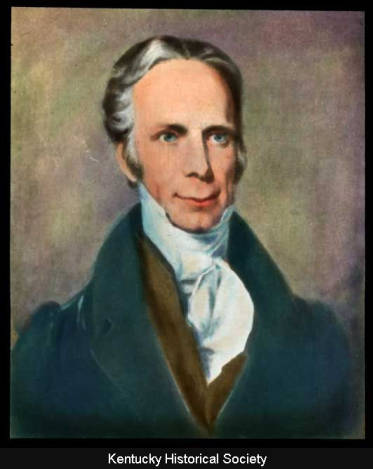
Henry Clay
Portrait of Henry Clay. ca 1920-30's. Image Courtesy of the Kentucky Historical Society
Ashland: The Henry Clay Estate
Color postcard of Ashland: the Henry Clay Estate. ca. 1920. Image Courtesy of the Kentucky Historical Society
Ashland: The Henry Clay Estate
Black and white postcard of Ashland and Henry Clay. ca. 1910. Image Courtesy of the Kentucky Historical Society
Ashland
The current Ashland was built by Henry Clay's son James in 1850s upon the foundation of the original house. Photograph courtesy of Whitney Todd.